
The rapid development in the field of Artificial Intelligence has completely revolutionized the sphere of creativity, and this effect can be seen extensively in design. Besides features like auto-image generation, smart tools aim at improving productivity and, thus, AI is slowly starting to influence the designer’s way of working. Yet, such a transition has simultaneously triggered intense global debates on whether AI really threatens the existence of designers or opens up new doors to unprecedented creativity.

AI as a Resource Which Streamlines the Creative Experience

AI-driven tools—ranging from sophisticated text-to-image generators to intelligent auto-layout designs and advanced design support software—make modern creators significantly more productive. These technologies act as a force multiplier, allowing professionals to bypass the “blank canvas” syndrome. They help designers to:
- Producing ideas quickly: Generating mood boards and conceptual sketches in seconds rather than hours.
- Automate tasks that are done repeatedly: Handling tedious work like resizing assets, removing backgrounds, or adjusting color palettes across hundreds of files.
- Consider a wider range of design alternatives: Using algorithms to test thousands of variations in layout and typography that a human might not have time to explore.
-
Collaboration: It collaborates with many professionals by providing a common visual language, rather than taking their place.
Issues of Employment Stability and Authenticity
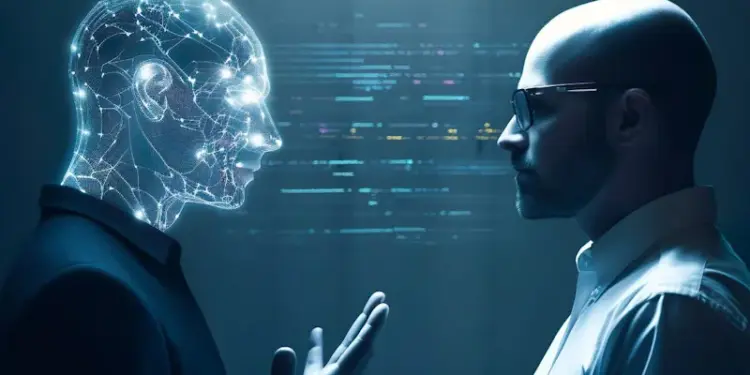
Despite its undeniable benefits, artificial intelligence has caused much concern within the design industry regarding the future of the workforce. As the barrier to entry lowers, the perceived value of technical skills is being questioned. Some of the concerns most people experience involve:
- Reduced need for specialized design roles: Fears that entry-level positions, such as production artists, may disappear as AI handles basic execution.
- Challenges in differentiation: The difficulty in distinguishing between works generated by artificial intelligence and those meticulously crafted by human hands, leading to a potential “homogenization” of style.
-
Copyright and Ownership: Ongoing legal discussions regarding who owns an AI-generated image—the prompt engineer, the software developer, or the original artists whose data trained the model.
These are valid concerns, especially considering that AI is getting better at generating designs virtually indistinguishable from those made by a person.
AI as a Chance for Advancement
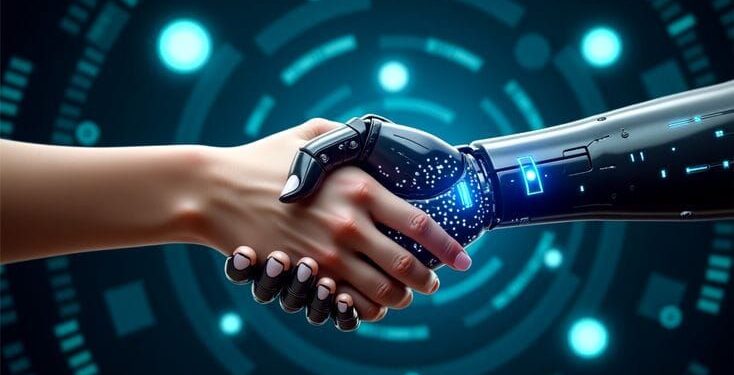
On the other hand, AI allows new creative possibilities that were previously unimaginable. By removing the burden of manual execution, the technology elevates the designer from a “pixel pusher” to a “creative director.”
- Strategic Focus: Designers can focus on more abstract and strategic tasks, such as user psychology, brand storytelling, and complex problem-solving.
-
Innovation: Creative industries benefit from faster, more innovative ways to work, allowing for rapid prototyping and more experimental risk-taking.
- Visual Styles: AI broadens the scope for new visual styles and design techniques, blending traditional aesthetics with algorithmic complexity.
Far from displacing creativity, AI changes the designer’s role to that of strategy, guidance, and unique artistic expression..
Conclusion: Not a Threat, but an Evolutionary Cycle
AI in design should not be viewed as an exclusively threatening element but, in the way that digital technologies replaced traditional drafting and physical paste-ups earlier, AI is just one more step in developing creative work. It is an extension of the human mind, not a replacement for it.
Those designers who are open to adaptation will find new opportunities to lead the industry, while resistant ones will lag further behind. Ultimately, true creativity—the ability to connect unrelated ideas and evoke deep human emotion—is a skill uniquely possessed by humans. AI just enhances how the artist expresses it, acting as the ultimate brush for the modern era.