

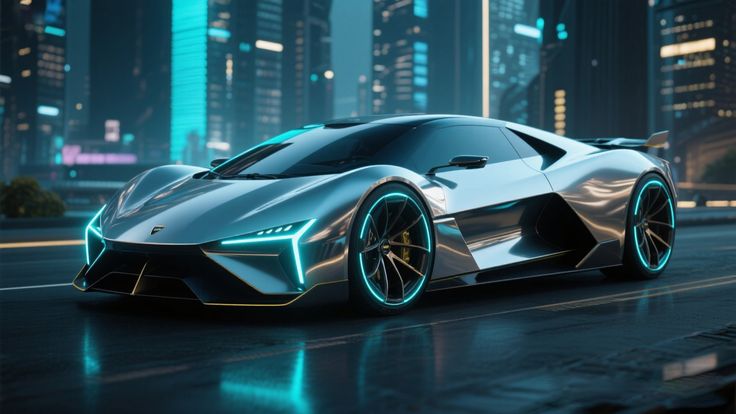
The car industry is rapidly moving forward, and the supercar segment is developing as a testing site for innovative design and technology. Over the last couple of years, supercars have shifted from being merely an icon of velocity and luxury to energy efficiency, AI, advanced aerodynamics, and ecological friendliness. The latest supercar models demonstrate the expected direction of the global automotive industry.

This article discusses the latest trends in modern supercar design: aesthetics outside, ideas inside, materials, technologies, and what is expected in the future.
Advancing the Design of Supercars in Contemporary Times
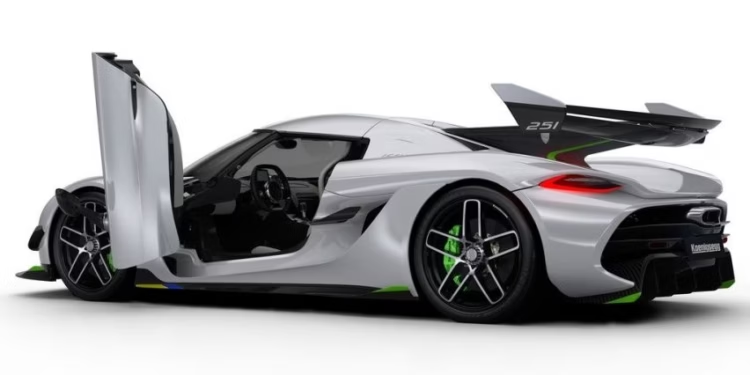
Previously, supercars were marked by their big engines and uniquely aggressive designs. Currently, it’s a far more complex process. Ferrari, Lamborghini, Bugatti, and McLaren, among others, including new entrants into the electric hypercar segment, aim to create designs that are:
- Lighter and more agile
- Accommodating electrification and hybrid technologies
- Integration of digital technologies and artificial intelligence
- Environmentally friendly yet with high performance:
It’s not about the looks anymore; design does have an important say in performance and efficiency these days.
Current Trends in Exterior Design of Supercars
Advanced Aerodynamics
The car bodies have increasingly defined and sharp surfaces. Each curve does not only provide a pretty pattern but also contributes to:
- Reduced air resistance
- Improving downforce
- Stability while driving at high speeds
Features like automatic spoilers and variable air vents became standard.
Lower and Broader Configurations
These contemporary supercars come with more low and broader profiles, which enhance their stability and give a more aggressive, modern look.
Development of LED and Laser Lights
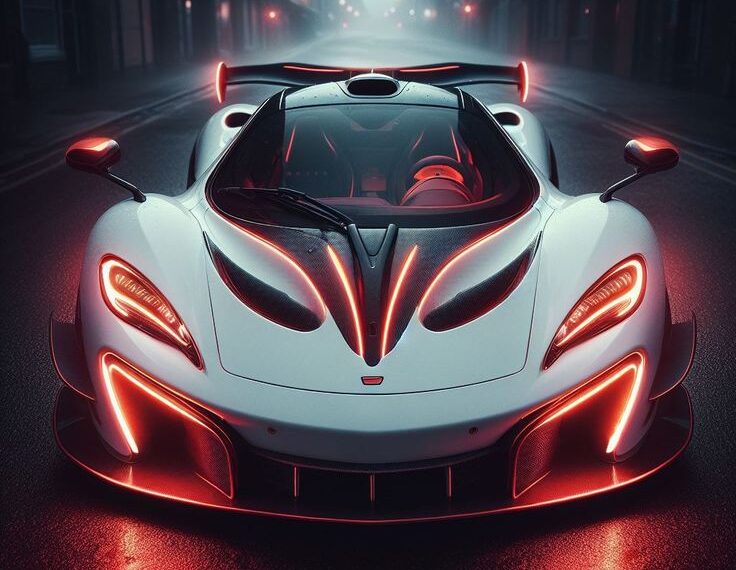
Front Lighting-Front lighting shall include:
- Matrix LED systems
- Laser irradiation
- Sleek, defined daytime running light designs
It further amplifies the cutting-edge and modern nature of supercars that exist today.
The Supercar Interior Takes Off
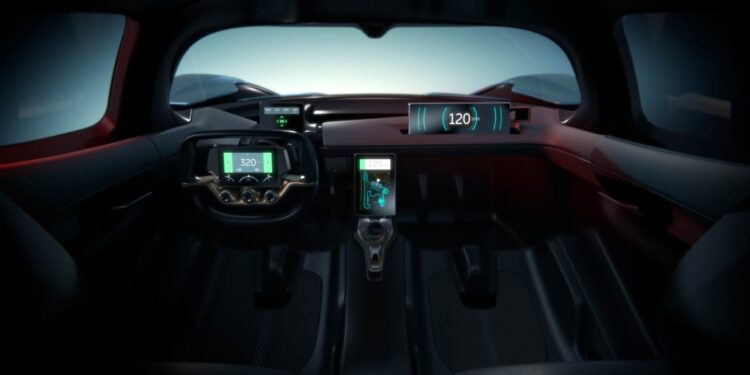
Interior design in a contemporary supercar shares a principle configuration as that of a fighter jet cockpit all around its driver. Note the following characteristic :
- Fully digital dashboard display
- Artificial Intelligence driven Infotainment systems
- Steering wheels with many racing features installed
- Carbon fibre racing seats in Comfort orientation, Alcantara appoints
- Ambient light with settings depending on the driving atmospheres
While performance is still integral, luxury and comfort have also become significantly important.
Lightweight Material in Supercars: Strength with Innovation
New supercars employ the following advanced materials:
- Carbon fiber
- Aerospace-grade aluminum
- Titanium
- Graphene and composite materials
These materials help make vehicles:
- Lighter
- Stronger
- Safer
- More energy-efficient
Electrification and Design Changes in Supercars
A fundamental change the supercar industry has been experiencing includes a shift towards electric and hybrid engines.
The design changes have included:
- Elimination of large front grilles, used for cooling traditional engines
- Smoother, more aerodynamic body shapes
- Batteries integrated in the structure
Electric hypercars now boast of an equally aggressive appearance and performance compared to their petrol-driven rivals.
Integration of AI and Digital Technology

The latest models of supercars are also designed to include smart systems like:
- AI-powered driving settings
- LiDAR technology and 360-degree camera systems
- Telemetry data of live races
- Voice-controlled assistants in the cabin
It is the combination of a physical design element with integrated digital technologies.
Eco-Friendly Supercars: The Only Way Forward
Global concerns about the environment have driven supercar makers to create models that are:
- More energy-efficient
- Low-emission
- Reusing quality recycled materials.
Today, eco-friendly supercars have moved from concept into reality.
The Evolution of Supercar Design
In times to come, supercar design is going to be headed toward:
- Totally electric hypercars
- Body structures that may change shapes
- Interiors with holographic screens and augmented reality
- Custom designs to fit the taste of the driver
The supercars of tomorrow will not only excel in speed but will also be smarter, safer, and ecologically aware.
Conclusion
The latest supercar models do not focus on their opulence and rapidity but merge the strongest art, innovation, eco-friendliness, and smart technologies. Boasting highly aerodynamic shapes and advanced fully digital interiors in light materials with the full implementation of AI, all features combined create a vision of high-performance cars for tomorrow.
Modern supercars show that design is not only about the look but also about practicality and efficiency-a future for the car market worldwide.